
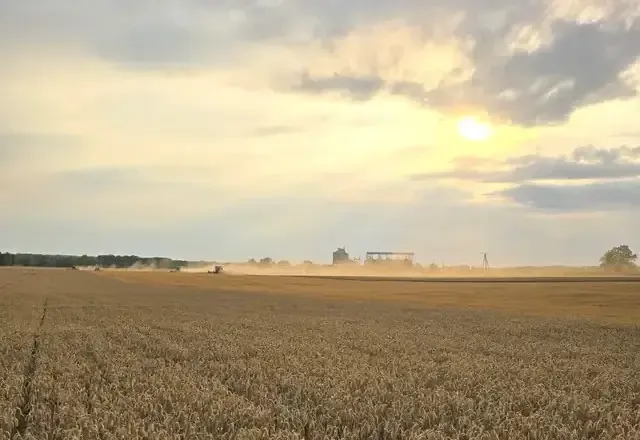
Can you buy agricultural land without being a farmer?
Yes, a person who does not have individual farmer status can legally buy agricultural land if they meet the conditions laid down in the Act on Shaping the Agricultural System. Under Article 2a of this Act, the basic rule is that agricultural properties are acquired by individual farmers, but the legislature has provided exceptions. The simplest procedure applies to properties with an area of less than 1 ha, while buying larger plots may require KOWR consent. Before starting a transaction, you should also establish whether the property is subject to a right of pre-emption and what restrictions will apply after its acquisition.
How much agricultural land can you buy without agricultural qualifications?
A person who is not an individual farmer can generally acquire an agricultural property with an area of less than 1 ha without obtaining consent from the Director General of KOWR. This threshold concerns the area of the property being acquired; it is not a general limit on the amount of land a private individual may own. For properties with an area of at least 1 ha, it is necessary to establish whether the buyer benefits from a statutory exemption or should obtain administrative consent. The distinction between the total area of the property and the area of agricultural land is also important, because these parameters determine the scope of application of the rules.
| Property area | Rules for acquisition by a non-farmer |
|---|---|
| A property containing less than 0.3 ha of agricultural land | The Act on Shaping the Agricultural System generally does not apply. |
| From 0.3 ha to less than 1 ha of property area | KOWR consent for acquisition is generally not required, but other restrictions may apply. |
| From 1 ha of property area | Individual farmer status, a statutory exemption or KOWR consent is generally required. |
It should be emphasised that buying a plot of less than 1 ha does not always mean complete freedom in the transaction. When a property of at least 0.3 ha, containing at least 0.3 ha of agricultural land, is sold, KOWR may have a right of pre-emption. Moreover, rules on a tenant's right of pre-emption or other specific regulations may apply to some transactions.
3 ways to buy agricultural land without being a farmer
Polish law provides several ways for people without individual farmer status to acquire agricultural land legally. The choice of procedure depends primarily on the area of the property, the relationship between the seller and the buyer, and the purpose of the purchase. The three basic options are purchasing a property of less than 1 ha, relying on a statutory exemption or obtaining KOWR consent. Each route involves different formalities and potential restrictions.
1. Buying an agricultural property with an area below 1 ha
Acquiring an agricultural property with an area of less than 1 ha does not require individual farmer status or consent from the Director General of KOWR. This option is also available to private individuals who do not run a farm and have no agricultural education. However, remember that KOWR may have a right of pre-emption over properties of at least 0.3 ha containing at least 0.3 ha of agricultural land. In addition, farming obligations and restrictions on disposing of land depend, among other things, on the property's location and statutory exemptions.
2. Acquiring land under statutory exemptions
A non-farmer may acquire an agricultural property with an area of at least 1 ha without KOWR consent if the transaction meets the conditions of one of the statutory exemptions. The most important include acquisition from a person close to the seller and inheritance of agricultural property. Exemptions also cover some other forms of acquisition, such as division of an estate, dissolution of co-ownership and certain enforcement and bankruptcy proceedings. However, exemptions concerning purchase consent, pre-emption rights and subsequent use of the land are not identical, so each transaction must be assessed under the relevant rules.
3. Buying agricultural land with KOWR consent
A non-farmer can also buy an agricultural property with an area of at least 1 ha on the basis of an administrative decision by the Director General of KOWR. In certain cases, the application is made by the seller, who must demonstrate that the property cannot be sold to an individual farmer. The prospective buyer then undertakes to conduct agricultural activity, and the transaction must not lead to excessive land concentration. A separate route is provided for individuals intending to establish a family farm who have agricultural qualifications and undertake to conduct agricultural activity and reside for the required period in a municipality associated with the farm being established.
Buying agricultural land over 1 ha as a non-farmer - the KOWR procedure
Buying agricultural land over 1 ha as a non-farmer generally requires consent from the Director General of KOWR, unless a statutory exemption applies. This obligation also covers properties of exactly 1 ha. In a typical sale to a person outside the group of eligible buyers, the application may be submitted by the property seller. Among other things, the procedure verifies whether the land can be sold to an individual farmer and how it is intended to be used.
How do you obtain KOWR consent to buy agricultural land?
In a procedure initiated by the seller, the conditions specified in Article 2a(4) of the Act on Shaping the Agricultural System must be documented. KOWR analyses, among other things, the possibility of selling the property to an individual farmer, the buyer's commitment to agricultural activity and the transaction's effect on land concentration. In a sale, the conditions for publishing the advertisement and the property's stated price are also important. The entire procedure can be presented in the following steps:
- Property verification - establishing the land's area, designated use and legal status, and checking whether KOWR consent is required.
- Publication of an advertisement - announcing the intention to sell in the eRolnik system, with a period of at least 30 days for individual farmers to submit responses.
- Preparation of documentation - gathering the required documents, including land and mortgage register details, an extract from the land register, documents concerning the property's designated use, and declarations by the seller and buyer.
- Submission of the application to KOWR - forwarding the documentation to the competent regional branch, taking into account the statutory deadline associated with the advertisement.
- Obtaining an administrative decision - a favourable decision enables the transaction to proceed under the conditions specified by law.
In a procedure initiated by the seller, the sale price must not be lower than 95% of the price stated in the advertisement on the KOWR portal. The application must be submitted within 6 months of the deadline for responses specified in the advertisement, as exceeding this period is grounds for refusing consent. Consent issued under this procedure remains valid for one year from the date on which the decision became final.
Who has a right of pre-emption over agricultural land?
The right of pre-emption over an agricultural property may belong to the tenant, KOWR and, in certain cases, the State Treasury represented by the State Forests. The tenant's priority derives from the law and requires specific conditions to be met, including those concerning the tenancy agreement and its performance. If an eligible tenant does not exercise their right, it may be necessary to check KOWR's rights. For properties including forest land or land covered by special regulations, the application of the Forest Act must also be verified.
When can KOWR exercise its right of pre-emption?
KOWR may exercise its right of pre-emption when an agricultural property meeting the statutory conditions is sold, unless one of the exceptions applies. The main considerations are a property area of at least 0.3 ha, an agricultural land area of at least 0.3 ha and the land's designated use. In such cases, the sale may require a conditional notarial agreement and notification of the entitled entity. However, KOWR's right of pre-emption does not arise in every transaction, for example when a person close to the seller acquires the property under a statutory exemption.
Gifting and inheriting agricultural land as a non-farmer
Gifting and inheriting agricultural land are also possible for people without individual farmer status. For a gift, it is particularly important whether the recipient falls within the statutory group of persons close to the seller. For inheritance, the rules provide a separate exemption from the requirement to obtain KOWR consent, regardless of the heir's agricultural qualifications. Before accepting the property, however, you should establish not only how ownership is transferred but also the obligations connected with its subsequent use.
Can agricultural land be transferred to a family member?
Yes, agricultural property can be transferred to a person close to the seller without requiring individual farmer status. The statutory definition of close persons includes descendants, such as children and grandchildren, ascendants, including parents and grandparents, as well as siblings, siblings' children, parents' siblings, a spouse, a spouse's parents, adoptive parents and adopted children, a stepfather, a stepmother and stepchildren. This means a parent may transfer agricultural land to an adult child even if the child has no agricultural education and does not run a farm. However, remember that an exemption concerning acquisition from a close person does not automatically exempt the new owner from all five-year obligations that may apply.
Can you inherit agricultural land without being a farmer?
Yes, a person who is not an individual farmer may inherit agricultural property regardless of its area, without obtaining the KOWR consent required for other forms of acquisition. This applies to both intestate and testamentary inheritance, subject to the relevant inheritance rules. For properties acquired through inheritance and division of an estate, the legislature also provides exemptions from certain restrictions concerning five years of farming and disposal of the land. However, the legal status of the estate, any co-ownership and obligations associated with the inherited property must be verified.
How do you become an individual farmer to buy land?
Obtaining individual farmer status requires all the conditions in Article 6 of the Act on Shaping the Agricultural System to be met together. Agricultural education alone or the purchase of a first agricultural plot is not sufficient. As a rule, it is necessary both to have resided in the relevant municipality for at least 5 years and to have personally run a farm for that period. Individual farmer status is associated with the following requirements:
- Agricultural qualifications - appropriate education or qualifications recognised by law.
- Running a farm - personally running an agricultural holding for at least 5 years, subject to specific statutory exceptions.
- Place of residence - residing for at least 5 years in a municipality in which one of the farm's properties is located, taking into account the rules on crediting earlier periods of residence.
- Land area - the total area of agricultural land covered by the statutory definition must not exceed 300 ha.
Personally running a farm means working on it and making decisions concerning agricultural activity. The rules provide specific derogations from some requirements, including in certain procedures for leasing land from the Agricultural Property Stock of the State Treasury. Therefore, farmer status should be assessed on the basis of the specific situation, rather than solely on a declaration that agricultural production is being conducted.
What restrictions apply after buying agricultural land?
Acquiring agricultural land may involve an obligation to run a farm for at least 5 years from the purchase date. Under Article 2b of the Act, an individual subject to this obligation must farm personally, and during that period the property generally cannot be sold or transferred into another entity's possession without the required consent. There are exceptions, including for inherited properties and land of less than 1 ha that lay within a town's administrative boundaries on the acquisition date. These restrictions should be considered before purchase, especially if the aim is later resale or leasing of the land.
It is also important to distinguish exemption from the requirement to obtain consent for acquisition from exemption from post-purchase obligations. For example, a property may be acquired in enforcement proceedings without KOWR consent, but this does not necessarily mean exemption from the five-year restrictions. In legally justified cases, consent may be obtained from the Director General of KOWR for earlier disposal of the property or transfer of possession to another entity.
Investing in agricultural land - what should you check before buying?
Investing in agricultural land requires analysis not only of the plot's price and area, but also of its legal status and potential future use. Before a transaction, you should verify the land and mortgage register, the land and buildings register, the designated use under the local spatial development plan, and access to a public road. Existing tenancy agreements, land quality, environmental restrictions and actual conditions for agricultural activity are also important. For larger projects, the investor should additionally assess asset maintenance costs, the availability of farm operators and potential sources of revenue.
Is buying agricultural land a good investment?
Buying agricultural land may be a justified long-term investment if the purchase price, intended use and legal restrictions fit the investor's strategy. Potential benefits may arise from agricultural production, lawful leasing or appreciation of the property, but none of these scenarios guarantees a profit. Unlike many financial assets, land requires detailed examination of local conditions and may have limited liquidity. Investing in agricultural commodities is a separate market segment, as it involves exposure to agricultural product prices rather than direct ownership of land.
Agro investments in Poland and abroad - support from Amberlan
Investments in agricultural land and agro-industrial enterprises require the acquisition process to be adapted to local regulations and market specifics. Amberlan supports investors interested in eastern markets by helping to identify investment opportunities, establish business contacts and organise international cooperation. The company's activities include investment advisory, international trade, transaction support and asset management, enabling agricultural ventures to be considered in a broader business context. The detailed scope of cooperation is presented in the Amberlan services section, and available investment opportunities can be explored among the investment offers.
Buying agricultural land without farmer status - plan your investment
Buying agricultural land without agricultural qualifications is legally possible, but the transaction must be adapted to the property's area, the buyer's status and statutory exemptions. Properties with an area of less than 1 ha can be acquired without KOWR consent, while larger properties often require additional formalities. Before deciding, you should also consider pre-emption rights, five-year restrictions and the profitability of the planned use of the land.
Are you planning an investment in the agro sector or the acquisition of an agricultural enterprise in foreign markets? Contact Amberlan to discuss investment opportunities and the scope of organisational support: https://www.amberlan.com/
Sources
- Sejm of the Republic of Poland. (2026). Act of 11 April 2003 on Shaping the Agricultural System - consolidated text. Journal of Laws of 2026, item 941. https://isap.sejm.gov.pl/isap.nsf/DocDetails.xsp?id=WDU20260000941
- National Support Centre for Agriculture. (n.d.). Seller's application. Gov.pl portal. https://www.gov.pl/web/kowr/wniosek-zbywcy
- National Support Centre for Agriculture. (n.d.). Obligations of the buyer of agricultural property. Gov.pl portal. https://www.gov.pl/web/kowr/obowiazki-nabywcy-nieruchomosci-rolnej
- National Support Centre for Agriculture. (n.d.). Individual farmer, agricultural qualifications. Gov.pl portal. https://www.gov.pl/web/kowr/rolnik-indywidualny-kwalifikacje-rolnicze
- National Support Centre for Agriculture. (2026). The right of pre-emption in practice. Gov.pl portal. https://www.gov.pl/web/kowr/pierwokup-prawo-pierwokupu-w-praktyce
- National Support Centre for Agriculture. (n.d.). Pre-emption and acquisition of agricultural properties. Gov.pl portal. https://www.gov.pl/web/kowr/pierwokup-i-nabycie-nieruchomosci-rolnych