
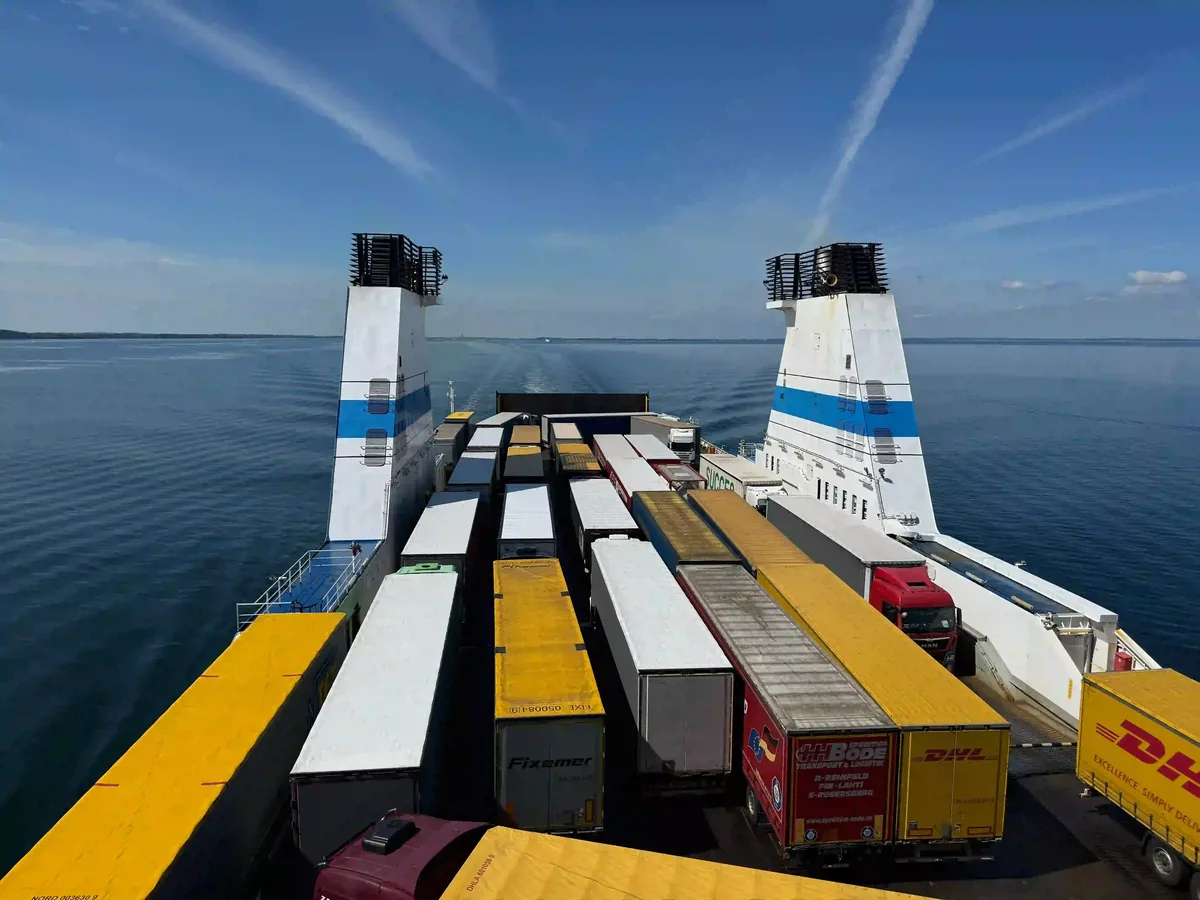
What are the types of international transport?
International transport includes road, rail, maritime, air and multimodal services combining different modes of transport. The choice depends on the type of cargo, distance, available infrastructure and required delivery date. Road transport offers flexibility, while rail and maritime transport allow larger batches of goods to be carried over long distances. The main types of transport are:
- Road transport - used for direct deliveries between warehouses, production plants and recipients.
- Rail transport - used, among other things, to carry agricultural commodities, bulk products and containers.
- Maritime transport - enables large quantities of goods to be transported between ports on different continents.
- Air transport - intended mainly for cargo requiring rapid delivery or characterised by high value.
- Multimodal transport - combines several transport modes, allowing the route to be adapted to infrastructure conditions.
The main transport routes between Europe and Asia
The corridors of the trans-European transport network TEN-T are among the important trade routes linking European logistics centres. The European Commission identifies, among others, the Baltic Sea - Adriatic Sea corridor and the Baltic Sea - Black Sea - Aegean Sea corridor. The Trans-Caspian International Transport Route (Middle Corridor) is also important for trade with Central Asia. Choosing the right route requires consideration of infrastructure capacity, the availability of border crossings and current transit restrictions.
The Baltic-Adriatic and Baltic-Black Sea-Aegean corridors
The Baltic-Adriatic corridor connects the Polish ports of Gdańsk, Gdynia, Szczecin and Świnoujście with Central Europe and ports in Italy, Slovenia and Croatia. The Baltic-Black Sea-Aegean corridor, in turn, covers 13 countries, including Poland, Romania, Bulgaria, Greece, Ukraine and Moldova. Both routes support the development of road and rail connections and transshipment terminals, expanding the options for organising deliveries between regions. However, their use must be planned with regard to current infrastructure conditions and the situation at individual borders.
The Middle Corridor - connecting Europe with Central Asia
The Middle Corridor, also known as the Trans-Caspian International Transport Route, connects Central Asia with the Caucasus and Europe. The route uses rail, road and maritime connections, including crossings of the Caspian Sea. It is one option for organising trade with Kazakhstan and other countries in the region, but requires coordination of transshipments and transit procedures. For businesses planning foreign trade with eastern markets, verification of counterparties and the transport conditions applicable in individual countries is also important.
How can you reduce international transport costs? 5 ways
International transport costs can be reduced by optimising routes, consolidating loads, choosing the right mode of transport, preparing documentation and properly determining trade terms. The effectiveness of these measures depends on the type of goods, delivery frequency and direction of trade. The lowest freight rate does not always mean the lowest cost of the entire operation, because additional expenses may arise during customs clearance, storage or transshipment. Therefore, the total delivery cost should be analysed before choosing a carrier.
- Route optimisation - comparing distance, road tolls, clearance times and terminal availability helps select a more favourable connection.
- Load consolidation - combining smaller consignments can reduce the transport cost per unit of goods.
- Choice of transport mode - adapting transport to the weight, volume and requirements of the cargo helps avoid unnecessary expenditure.
- Preparation of documentation - complete customs and transport documents reduce the risk of delays and additional charges.
- Verification of trade terms - proper use of Incoterms 2020 rules defines the allocation of costs, obligations and risks between the parties to the transaction.
However, Incoterms 2020 rules do not determine the transfer of ownership of the goods or specify the law governing the sales contract. These matters should be regulated separately in the commercial contract.
Which documents are needed in international transport?
International transport documentation depends on the mode of transport, origin of the goods and countries involved in the transaction. An international CMR consignment note is used in road transport, while maritime transport uses, among other documents, a bill of lading. Imports and exports outside the European Union may also require customs declarations, origin documents and appropriate permits. The basic documents include:
- Commercial invoice - confirms the subject, value and parties to the transaction.
- Packing list - specifies the contents, number of packages and weight of the consignment.
- CMR consignment note - a transport document used in international road transport covered by the CMR Convention; it is not a customs document.
- Customs documents - required when declaring goods for the appropriate customs procedures.
- Certificates and attestations - used for goods subject to sanitary, veterinary, phytosanitary or other specific requirements.
Businesses involved in customs operations in the EU generally also need an EORI number. For transit through third countries, the TIR procedure may be used, subject to meeting the convention's conditions and holding an appropriate TIR carnet. The TIR procedure can streamline customs transit, but does not exclude inspections by customs authorities.
Transporting agricultural commodities and food products - requirements
Transporting agricultural commodities and food products requires transport conditions to be adapted to the characteristics of the cargo and the rules of the countries of origin, transit and destination. For grain, factors include moisture and protection against contamination, while perishable products require an appropriate temperature to be maintained. When imported into the European Union, certain goods are subject to sanitary, veterinary or phytosanitary checks. The scope of checks depends on the product's category, tariff code and origin, rather than merely on the fact that it crosses a border.
The TRACES system and border checks on food
TRACES is a European Commission system supporting the handling of documents and checks concerning, among other things, animals, products of animal origin, plants, and selected food and feed. Certain consignments entering the EU must be notified and a Common Health Entry Document (CHED) issued. Checks may include verification of documents, cargo identity and physical assessment at designated border control posts. Not all food products are subject to identical procedures, so the requirements must be established before transport begins.
How can logistics challenges in foreign trade be reduced?
The main logistics challenges in foreign trade include border delays, changes in transport costs, infrastructure constraints and documentation errors. Additional risks may arise from differences in national regulations, trade sanctions and carrier availability. Reducing risk requires documents to be prepared in advance, counterparties to be verified and alternative supply routes to be developed. In trade in agri-food products, monitoring transport conditions is equally important to reduce the risk of quality losses.
International trade with eastern markets - support from Amberlan
Organising imports and exports in eastern markets requires knowledge of local regulations, trading partners and transaction conditions. Amberlan supports businesses in establishing international cooperation, finding counterparties and coordinating trade processes. The company's activities include, among other areas, commodities trading, investment cooperation and projects involving the agri-food sector. Knowledge of the specifics of Eastern European and Central Asian markets allows local conditions to be taken into account at the transaction preparation stage.
International transport - plan a safe delivery
Well-organised international transport requires the right choice of route, transport mode, documentation and trade terms. In imports and exports of agricultural commodities and food products, quality requirements, customs procedures and restrictions affecting particular markets are especially important.
Are you planning to expand foreign trade or work with counterparties from Eastern Europe and Central Asia? Contact Amberlan to discuss business opportunities and the scope of support in organising transactions: https://www.amberlan.com/.
Sources
- Sejm of the Republic of Poland. (2004). Act of 11 March 2004 on Value Added Tax, as amended, particularly Article 83. Internet System of Legal Acts. https://isap.sejm.gov.pl/isap.nsf/DocDetails.xsp?id=WDU20040540535
- European Commission. (n.d.). Trans-European Transport Network (TEN-T). https://transport.ec.europa.eu/transport-themes/infrastructure-and-investment/trans-european-transport-network-ten-t_en
- European Commission. (n.d.). TRACES - Trade Control and Expert System. https://food.ec.europa.eu/horizontal-topics/traces_en
- United Nations Economic Commission for Europe (UNECE). (n.d.). TIR - Introduction. https://unece.org/transport/tir/introduction
- International Chamber of Commerce (ICC). (2020). Incoterms® 2020 - Questions and Answers. https://library.iccwbo.org/clp/clp-incoterms-qa-2020.htm